
My goal all along this cancer adventure (journey? rollercoaster? shitshow?) was to get through it as quickly as possible to get to my “new normal” and to be cancer free going forward. So, when my BRCA-1 mutation was confirmed, I knew that getting an oophorectomy (removal of ovaries) was in my near future as part of this process in order to eliminate my genetic predisposition for ovarian cancer. BRCA-1 mutation carriers are recommended to do this procedure between the ages of 35-40.
After meeting with my Gynecologic Oncologist in the fall I decided that the optimal time for this surgery would be shortly following my mastectomy. With chemo drugs still lingering in my system, I have a small window where an additional instance of cancer is REALLY small. Plus, chemo put my body through chemical menopause, so it felt prudent to take my hormone producing ovaries out of my body before they kicked back on. This way, I could avoid hormonal adolescence (it wasn’t that fun the first go-around, just ask my brother) and could also avoid going through menopause twice. From everyone I spoke with and from what I’ve read, one of the toughest parts of an oophorectomy is dealing with immediate onset menopause, so I felt good about being able to avoid this side-effect if I had the procedure done while still in chemo-pause.
Dr Prendergrast (my Gyn-Onc) also recommended a total hysterectomy (in addition to removing the ovaries, also removing the fallopian tubes, uterus and cervix – a lesson in female anatomy straight out of 7th grade health class). Emerging research is showing that BRCA-1 carriers may have increased risks of cancers in these parts as well, plus without ovaries, they don’t serve much of a purpose (some women have their ovaries removed and keep the rest to allow for IVF later on – but that’s not part of my life plan). So, we decided to do a total laparoscopic hysterectomy including oophorectomy.
In addition to eliminating the ability to get pregnant and give birth to children, this procedure has some significant downsides. Life spans for women with this procedure performed before natural menopause are reduced, a function of not having estrogen produced for as long as your body intended. Some women choose to have hormone replacement therapy to account for this, but given my risk for hormone receptive cancers, this isn’t a smart option for me. Like all of the cancer treatments, there is a tradeoff for every procedure. In this case, the risk of ovarian cancer – that is incredibly difficult to detect early, and thus has a fairly low 5-year survival rate – is a greater risk than a slightly shortened life span.
So, two weeks ago, I went into the hospital for surgery. 4 hours and a few incisions later and I was headed home. Thank to some pretty cool medical technology, the surgery was performed laparoscopically. They made an incision in my belly button for a camera, and two incisions above my hip bones for the tools. They tilted me back slightly to allow gravity to shift my organs out of the way (don’t worry, I was under anesthesia) and pumped my belly full of air to get some room to work. Dr P took some pictures of my organs to show that there was no signs of cancer (as expected, but still, yay!) and after removing the right parts, she sewed and glued my up and sent me on my way.
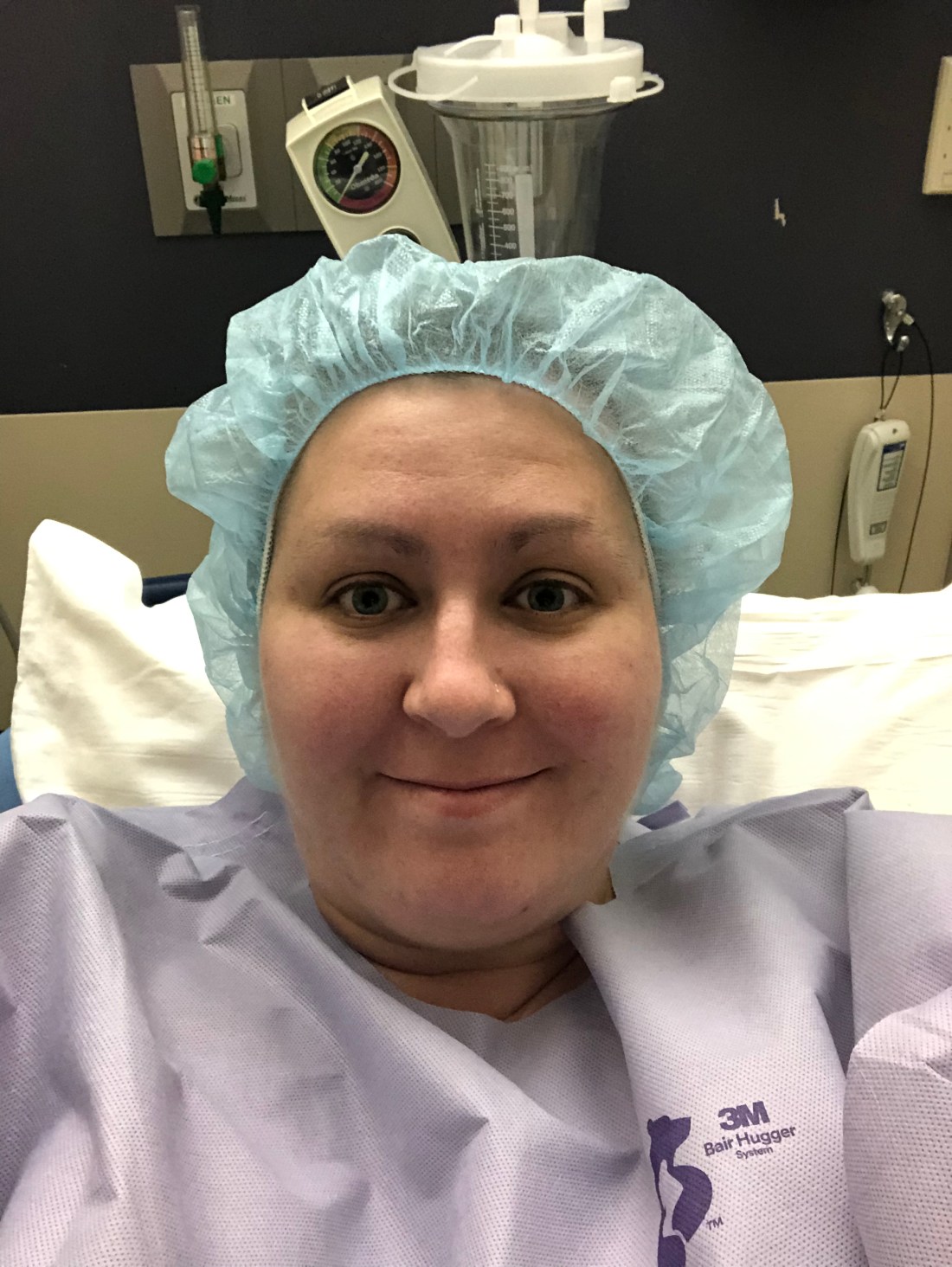
Everything I read said that the worst short term side effect was dealing with all the air they pump into you during surgery – because the air is still inside you when they close you up. When I awoke I was VERY bloated and for a few days after surgery I had some pretty painful gas with only two ways out – burps and farts. (did you know that when gas is attempting to escape your body and passes through your diaphragm it causes heart-attack like pain in your right arm? *the more you know*) Dr P wasn’t convinced that I was done with menopause side-effects and warned me that I might get some nasty hot-flashes within 48 hours of surgery, but two weeks later and I’m still largely hot-flash and night-sweat free. yay!
Now that the gas is gone, the hardest parts of recovery are wearing real clothes and following the lift restrictions from Dr P. Given the locations of the incisions, wearing “real clothes” (things other than leggings and sweats) is not a terribly comfortable feeling.
Unfortunately, until the end of April I can’t lift anything over 10 pounds (basically a gallon of milk) which makes everyday activities like walking the dog, grocery shopping and yoga nearly impossible.
Fortunately, my cancer risk going forward is vastly lower – so its totally worth it.
 Fortunately Unfortunately